There is nothing in the social media space that is guaranteed to make you win. Behind every Instagram influencer, every LinkedIn expert, every Facebook page with millions of likes, every TikTok account that everybody knows, and every YouTube channel with a billion views, there is always a person or a team that has something in mind that made them successful.
This is a rule of thumb for any company or brand that wants to succeed in the social media space. However, having a strategic plan might sound a bit overwhelming for those who want to achieve their marketing goals through social networks. This article will provide you with a step-by-step guide on how to develop a social media marketing strategy.
Having a social media strategy will ensure your efforts are not wasted since you will always know what to do and what not to do. The strategy will tell you what to do to understand your customer better, set your goals in the social media space, choose the social networks where your audience dwells, decide what kind of content to post, measure your performance, and optimize your efforts so that you can achieve your goals confidently.
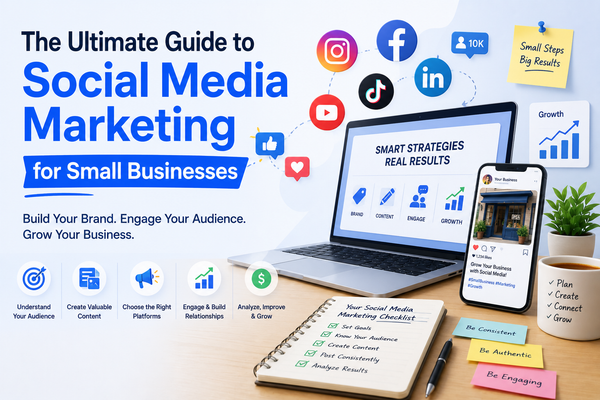
7 Steps To Developing a Social Media Marketing Strategy
- Define and clarify the business objective
- Learn about the target audience
- Determine the social networks to focus on
- Develop the content strategy
- Create a social media content calendar
- Use paid social media advertising
- Measure and analyze performance
1. Define and Clarify the Business Objective
In order to develop an effective social media strategy, it is essential to understand and clarify the objective of the business.
In other words, it is necessary to have well-defined goals that will serve as a benchmark for developing the strategy. It is critical to set realistic goals that will contribute to the overall objectives of the business. Ask yourself what you want to achieve by using social media.
Some common social media goals include:
- Raising awareness about the brand
- Generating leads
- Driving traffic
- Increasing sales
- Building brand communities
- Retaining existing customers
It is essential to keep in mind that the primary goal will differ depending on the nature of the business that the company represents. For instance, the objective of a local bakery will be different from the objective of a multinational corporation. In addition, when the goals are set, it will be easier to come up with effective social media content and measure performance so that it is possible to have an accurate understanding of where the business stands.
2. Learn About the Target Audience
One of the most common mistakes that companies make when they try to publish content on social networks is trying to guess what their audience wants. However, it is essential to do your homework and research before developing a social media content strategy that will actually work.
In order to do that, it is critical to have access to the following information:
- Basic demographics
- Interests
- Social networks they use
- Pain points
- Purchasing patterns and behaviors
- Preferred method of social media interaction
After gathering the required information, it is a good idea to identify buyer personas so that it will be easier to customize the social media strategy and know what kind of content the target audience will actually like and engage with.
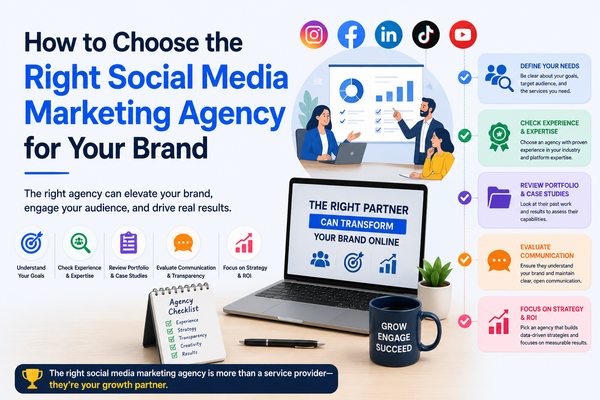
If it is challenging to do that or if you need somebody to take a look at the information that you have and help you come up with a strategy, it is always a good idea to turn to a professional social media agency, such as Evolve Digital, for help.
3. Determine the Social Networks to Focus On
When learning how to create a social media marketing strategy, it is essential to understand that in order to get good results, it is critical to focus on the social networks where the audience spends most of their time. In most cases, there will be only two or three social networks worth investing time and effort in.
Below are some of the most popular social networks that are great for different types of businesses:
- Instagram – best for fashion and beauty, lifestyle and luxury brand communities, and other image-centric businesses and brands.
- LinkedIn – good for B2B networking, corporate news, and professional communities.
- Facebook – great for local businesses, community engagement, and leveraging the power of Facebook advertising.
- YouTube – ideal for video content.
- TikTok – great for entertaining the audience and appealing to Gen Z.
Therefore, it is critical to make smart choices when it comes to choosing social networks that are the best fit for the business and the target audience.
4. Develop the Content Strategy
The content strategy is probably one of the most important parts of the social media strategy, as it is the driving force behind achieving the outlined goals. In order to develop a great content strategy, it is essential to follow a few simple guidelines.
First of all, it is critical to have a balanced content mix that will appeal to the audience.
It is a good idea to have a variety of educational, entertaining, and engaging content and try to avoid hard-selling.
A great content mix could look something like this:
- 40% educational content
- 30% storytelling
- 20% community content
- 10% promotion
Second, it is essential to focus on quality over quantity.
Even though it is important to post regularly, it is a good idea not to overwhelm the audience with too much content. A reasonable number of posts is three to five times per week, and it is critical to be consistent so that the audience knows when to expect the content.
Finally, it is essential to ensure that the content is interesting and engaging.
The content could include:
- How-to's
- Storytelling
- Testimonials
- Reviews
- "About Us" content
- Other things that the audience is interested in
It is critical to avoid hard-selling and focus on providing value instead.
5. Create a Social Media Content Calendar
The next step is to create a social media content calendar.
A content calendar is critical because it will:
- Help you organize the content and have a clear vision of what to post and when to post it
- Ensure that the content aligns with the overall goals of the business
- Ensure proper spacing between the posts so that it is not possible to see the same content on the same days or at the same time
- Allow scheduling so that it is much easier to plan in advance and save time
The content calendar should also include text, media, hashtags, and calls-to-action.
If you are not sure how to create a content calendar, it is always a good idea to turn to a professional social media agency, such as Evolve Digital, for help.
6. Use Paid Social Media Advertising
A lot of people believe that in order to be successful on social media, it is necessary to avoid spending money on advertising. However, it is essential to understand that social media advertising is a vital part of any social media strategy that is supposed to yield good results.
Social networks, such as Facebook, Instagram, and LinkedIn, have come a long way in terms of advanced technologies that allow companies to market their goods and services to the exact target audience.
Benefits of paid social media advertising:
- Retarget those who have already visited the website and encourage them to revisit the page and eventually make a purchase
- Generate leads
- Launch new products and services
- Promote events
- Drive traffic to the website
The key point is that it is essential to use engaging content and calls-to-action in social media ads in order to achieve good results. In addition, it is critical to track the performance of social media advertisements so that it is possible to see which ads perform best and which ones can be discarded.
7. Measure and Analyze Performance
As mentioned above, in order to achieve good results, it is essential to measure and analyze the performance of social media accounts on a regular basis. It is critical to track social media metrics so that it is possible to see what works and what does not work.
Below are some of the most important social media metrics that should be monitored on a regular basis:
- Reach and engagement
- Increase in website traffic
- Lead generation and sales
- Customer acquisition cost
- Return on investment (ROI)
It is a good idea to analyze the performance of the social media account at least once a month so that it is possible to optimize the efforts and achieve better results. In addition, it is always a good idea to continue learning and stay up-to-date with the latest changes in the social media space as the social media landscape is constantly evolving.
The best social media marketers are the ones who are always willing to learn and find new ways to optimize their efforts so that they can get more out of their time and money.
Most Common Social Media Mistakes to Avoid
Unfortunately, there are a lot of social media mistakes that people tend to make, even though they try really hard not to do so. Nevertheless, there are certain social media mistakes that are much more likely to occur than others, so it is essential to avoid them at all costs.
Key mistakes to avoid:
- Posting too rarely or, on the contrary, spamming the audience with too many updates
- Failing to engage with the audience and respond to their comments
- Using low-quality images and videos
- Not utilizing the power of analytics
- Failing to provide unique value
- Being inconsistent with the brand voice
Avoiding these social media mistakes will give you a head-start in social media.
The Future of Social Media and Its Impact on Marketing Strategy
With the emergence of artificial intelligence (AI), social media has become much more automated than before. Many processes that required human interaction can now be automated with the help of AI.
However, it is crucial to realize that humans still play a very important role in the social media space since it is humans who can provide engaging content and interact with the audience. In other words, AI can make certain repetitive tasks much easier, but human interaction is essential in order to create a unique voice for the brand and engage with the audience.
Companies that use the latest technologies while leveraging human interaction will be the ones that dominate the social media landscape.
If you are looking for a social media agency that knows how to combine technology and human interaction to help you achieve your marketing goals on social media, it is a good idea to turn to Evolve Digital.
Conclusion
In conclusion, as can be seen from the content above, it is clear that there is a lot to be done in order to develop an effective strategy. In addition, it is evident that in order to get good results from social media, it is essential to spend a considerable amount of time working on:
- Setting clear objectives
- Learning about the target audience
- Choosing the right social networks
- Developing an efficient content strategy
- Measuring performance
- Optimizing efforts
It is also critical to avoid the most common social media mistakes and remember that the efforts put into social media will eventually pay off. Nevertheless, it is worth considering the option of hiring a professional social media agency that has extensive experience and knows how to leverage the latest technologies to maximize results.
FAQs
What is a social media marketing strategy?
A social media marketing strategy is a comprehensive plan that describes how you are going to reach out to the target audience, what kind of content you are going to post, how you are going to engage with the audience, and which networks to focus on in order to achieve specific objectives.
How often should you post on social networks?
There is no absolute truth when it comes to determining how often you should post on social networks since it will depend on a variety of factors, including the platform and the content. However, as a rule of thumb, it is recommended to post three to five times per week. In addition, it is essential to engage with the audience by responding to their comments and questions. If you are not sure what and how to post on social networks, it is always a good idea to rely on the help of a professional social media agency, such as Evolve Digital, for assistance.
How to determine which social networks to use?
It is essential to determine which social networks to use based on where your target audience spends most of their time. For instance, LinkedIn is great for B2B companies, Facebook is ideal for local businesses, Instagram and TikTok are best for image- and video-centric companies, and YouTube is great for video content creation.
Is it worth investing in paid social media advertising?
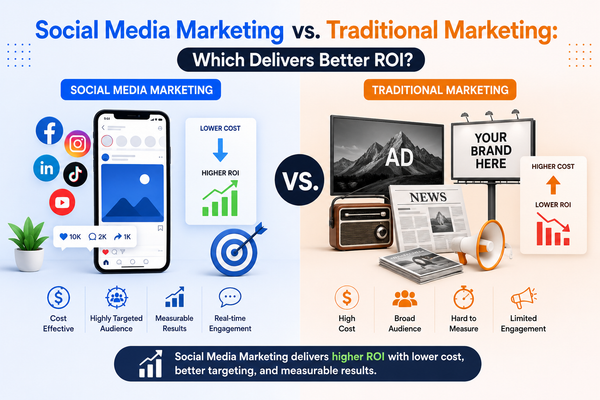
When it comes to social media marketing, it is essential to understand that while organic social media content is a great way to build relationships with the audience, it is a really good idea to invest in paid social media advertising. In other words, it is a great way to reach out to new audiences by utilizing the power of social media networks and targeting the exact audience that is of interest to the business. It is also essential to keep in mind that while it is a good idea to invest in paid advertising, it is crucial to have a solid strategy when it comes to social media marketing in order to achieve the best possible results.
How long does it take to see results from social media marketing?
The time it takes to see results from social media marketing will depend on a wide range of factors, including the goals, the platforms, and the strategies. As a rule of thumb, it takes three to six months for organic social media marketing to yield good results, whereas paid social media marketing can yield impressive results almost right away. It is also essential to keep optimizing the efforts in order to make sure that the best possible value is delivered for the money invested in social media marketing.
Work With Evolve Digital
Want results like these for your brand?
We help brands grow with SEO, paid media, and ecommerce strategy that actually converts. Tell us your goals and we'll map your next stage of growth.
Book a Free Strategy Call